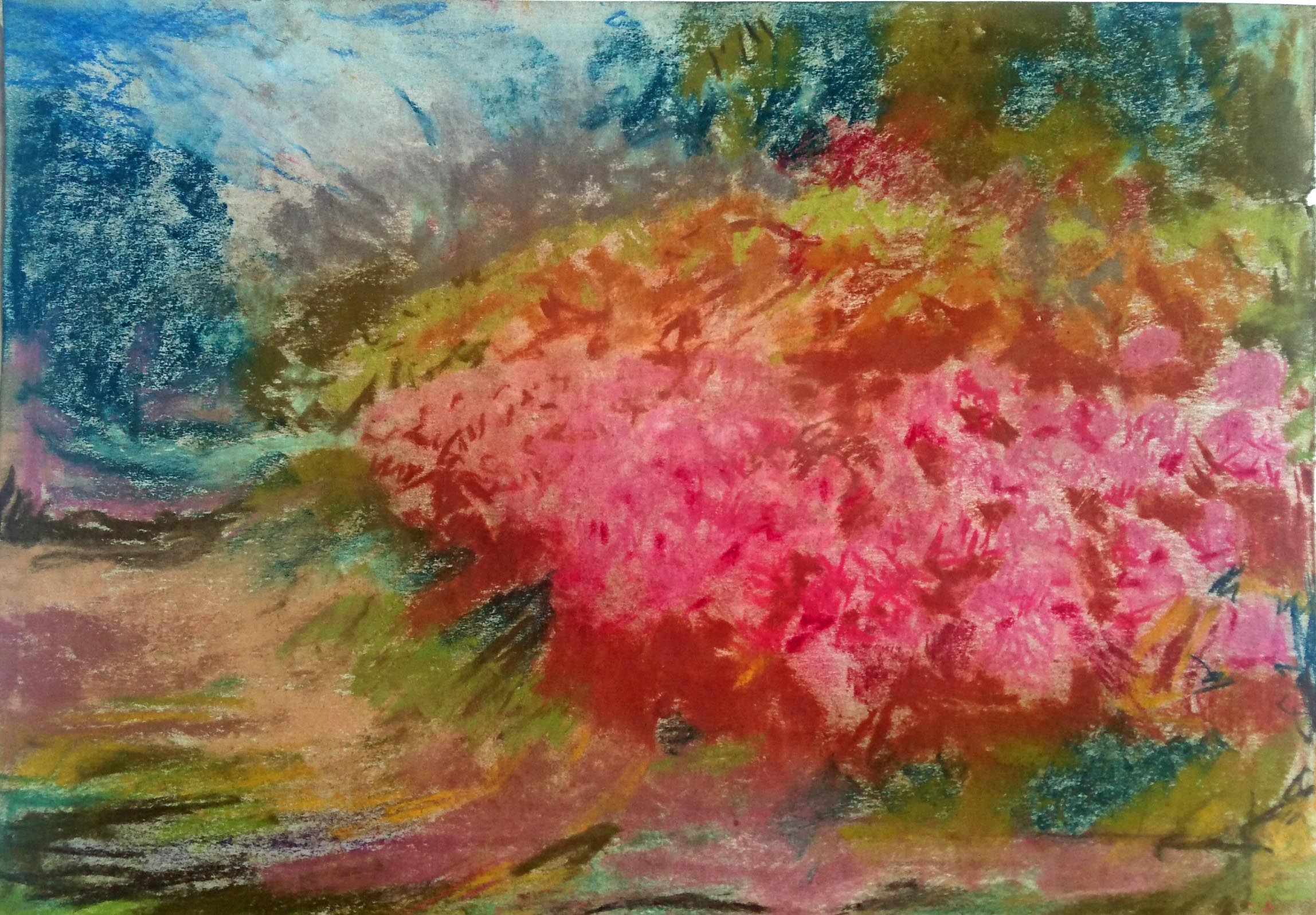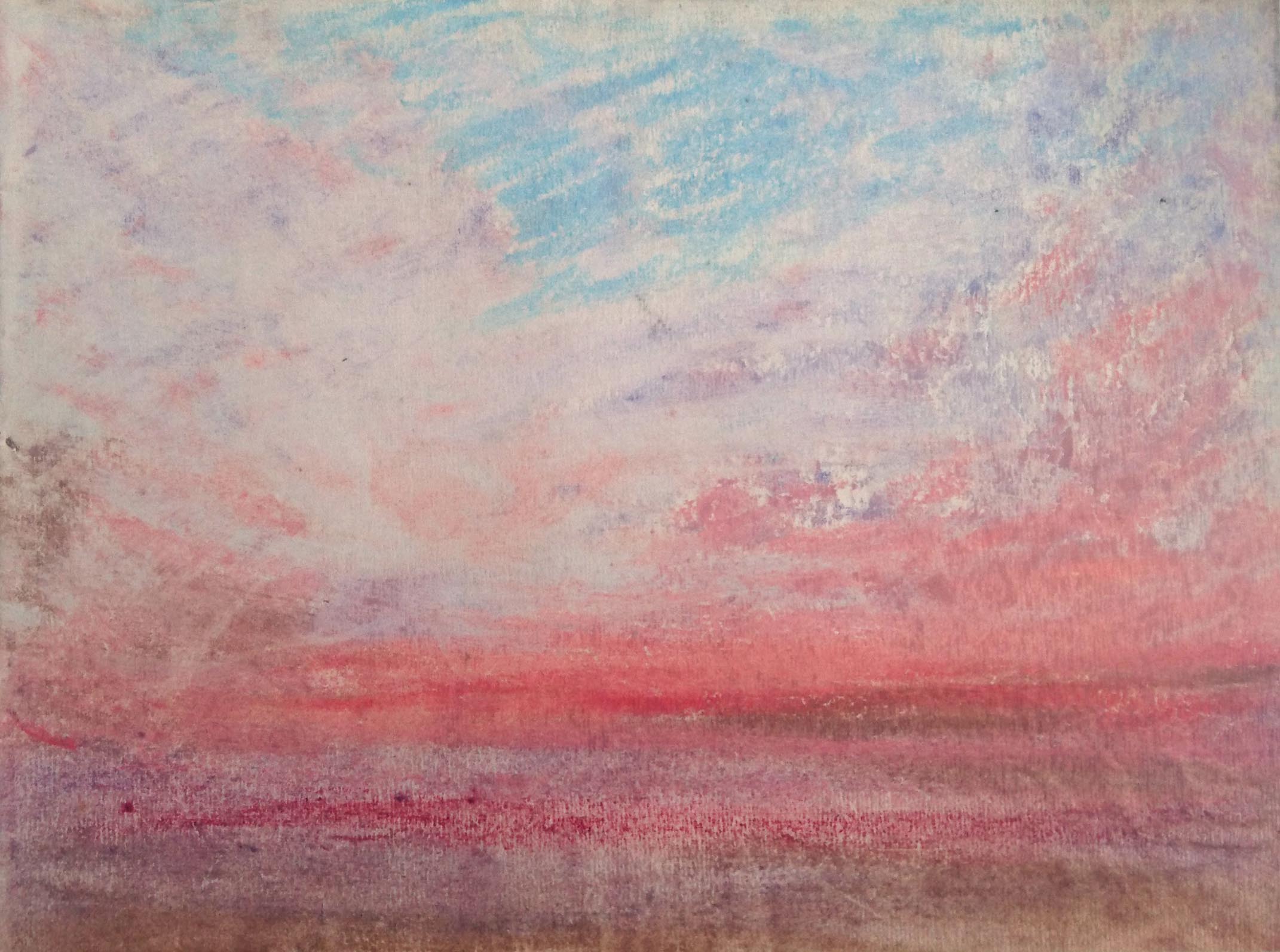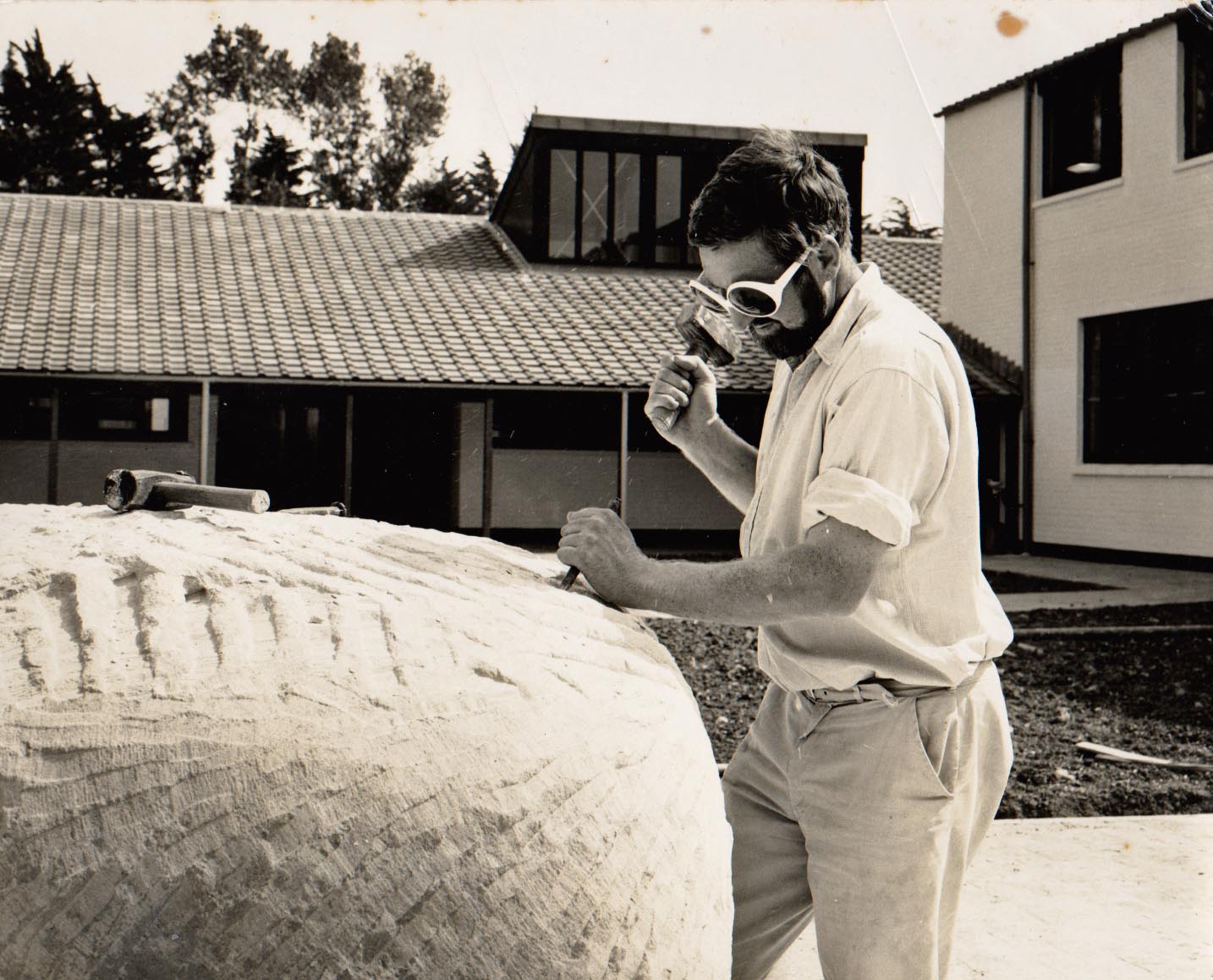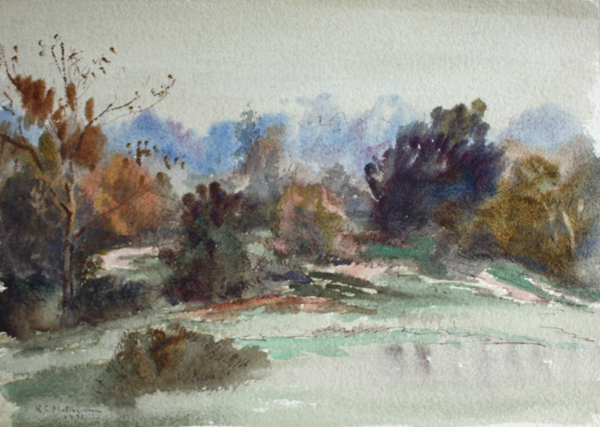

We have recently acquired an extensive collection of works by the Black Country artist Patricia Arnett. Born in West Bromwich, she was trained at the Slade School of Art in London, having completed her foundation at The Memorial School of Art, West Bromwich.
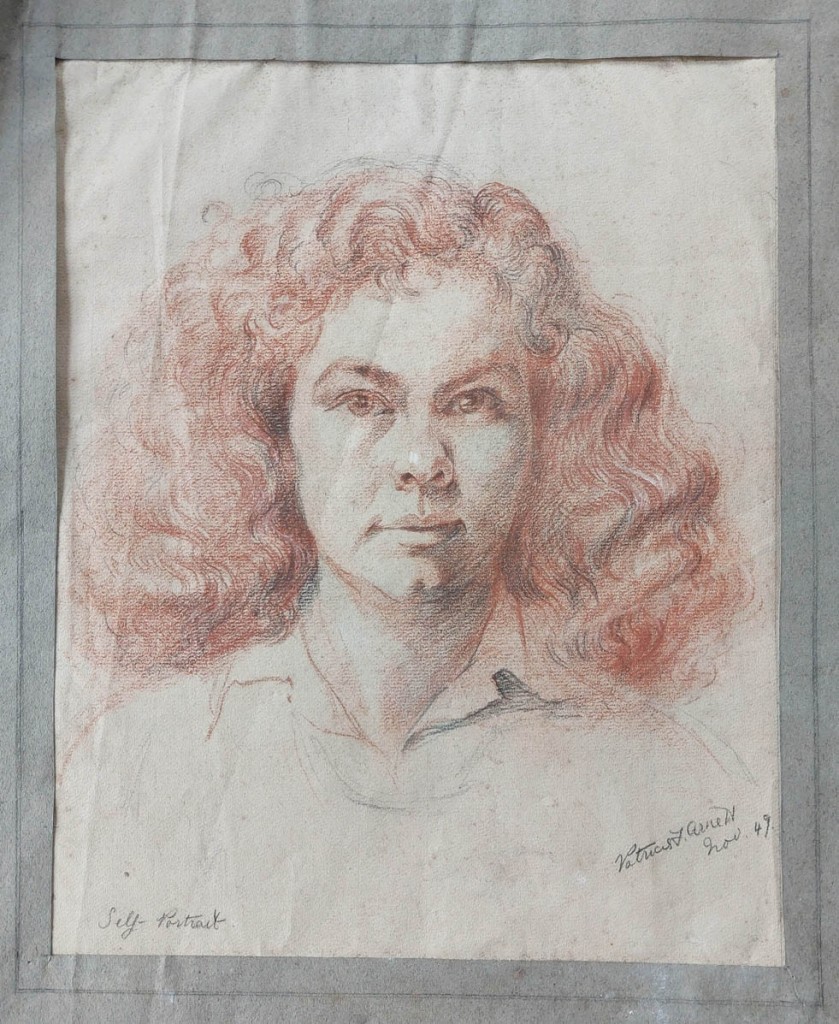
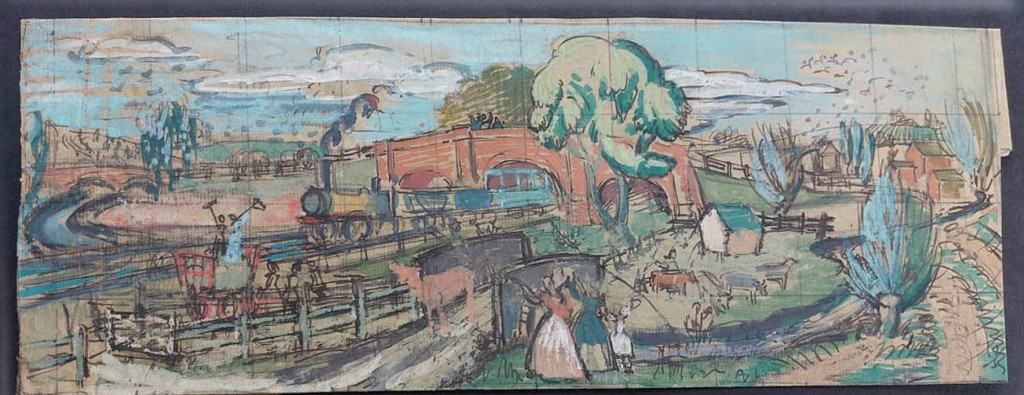
A brilliant student and illustrator, she was awarded The Richardson Scholarship at the University of London and First Prize for Design and Drawing. In 1940, Patricia was commissioned to paint a set of murals in the West Bromwich central library, which she undertook during her vacations from the Slade, illustrating scenes from Chaucer’s Canterbury Tales. She also painted murals commemorating John Wesley and the ‘First Train Through West Bromwich’, a sketch design for which is in our collection.
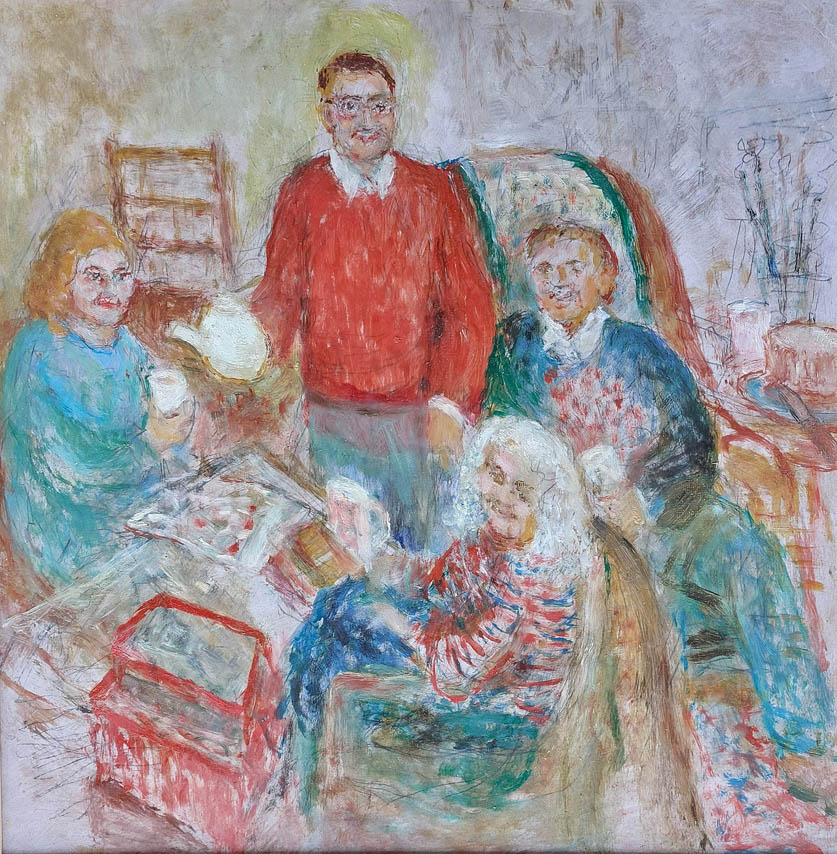
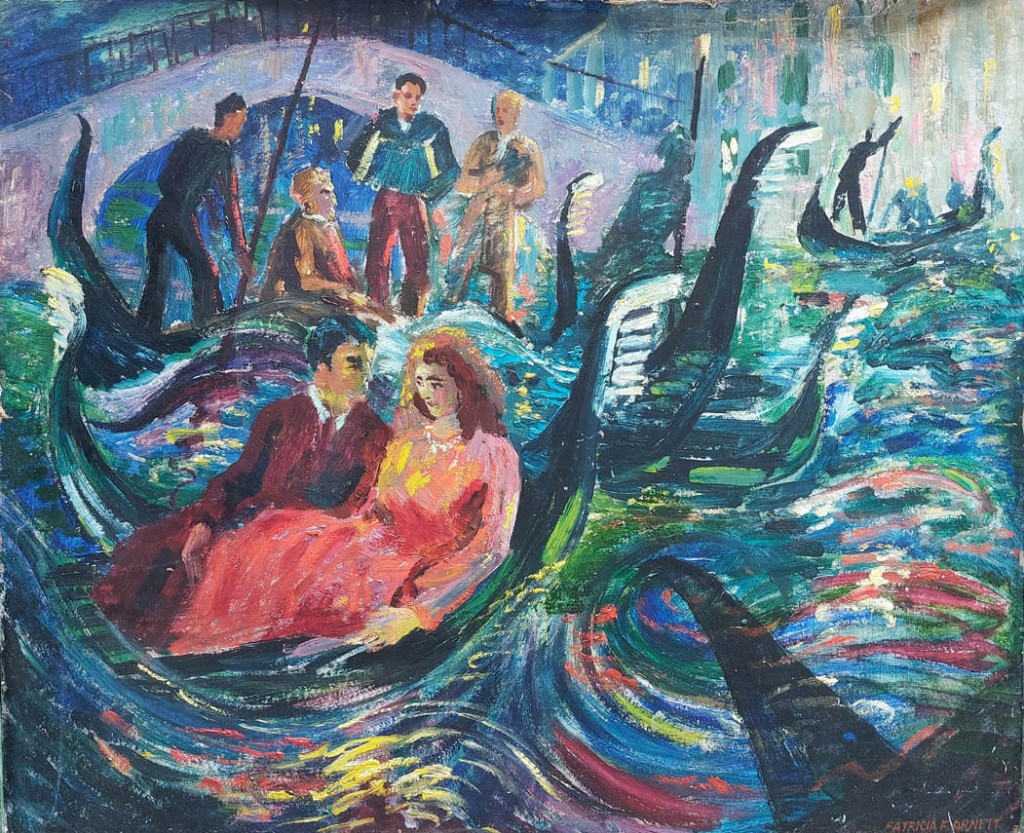
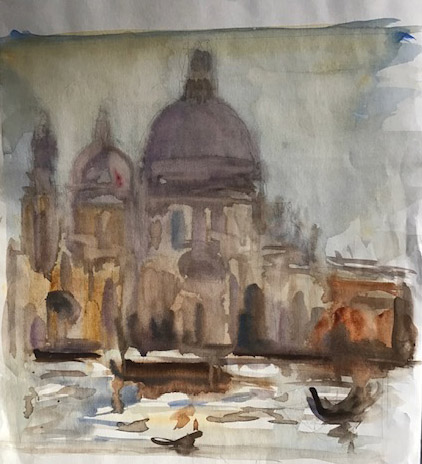
She continued to receive commissions to produce mural works in school and other buildings in the town. In 1952, she married Harold Harris (1912-1982), who had been a fellow student at art school. As the decade progressed, her work, always very clearly rooted in her Christian faith, became more overtly spiritual, and she increasingly abandoned her precise, narrative style of the 1940s, to embrace a broader expressionist naivety, with rich colour, heavily laden brush work and a vivid energy. After their marriage, they travelled together in Europe, visiting Spain, Italy and France: moments which Pat painted with a ferocious animation, often including images of herself and Harold as participants.
Patricia had been exhibiting with the Royal Birmingham Society of Artists (RBSA) from 1943, but in later decades, she and Harold tended to exhibit in joint shows, organised by themselves, throughout the Midlands. Following Harold’s death in 1982, she remained in her Tipton home, in the heart of the industrial Black Country of the West Midlands. A prolific artist, she was actively painting throughout her life, holding a major exhibition in West Bromwich to mark her 90th birthday, and remaining a key figure in the artistic and cultural life of the region.
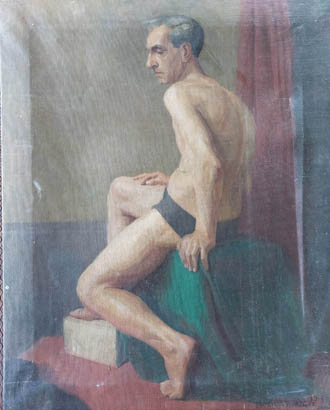
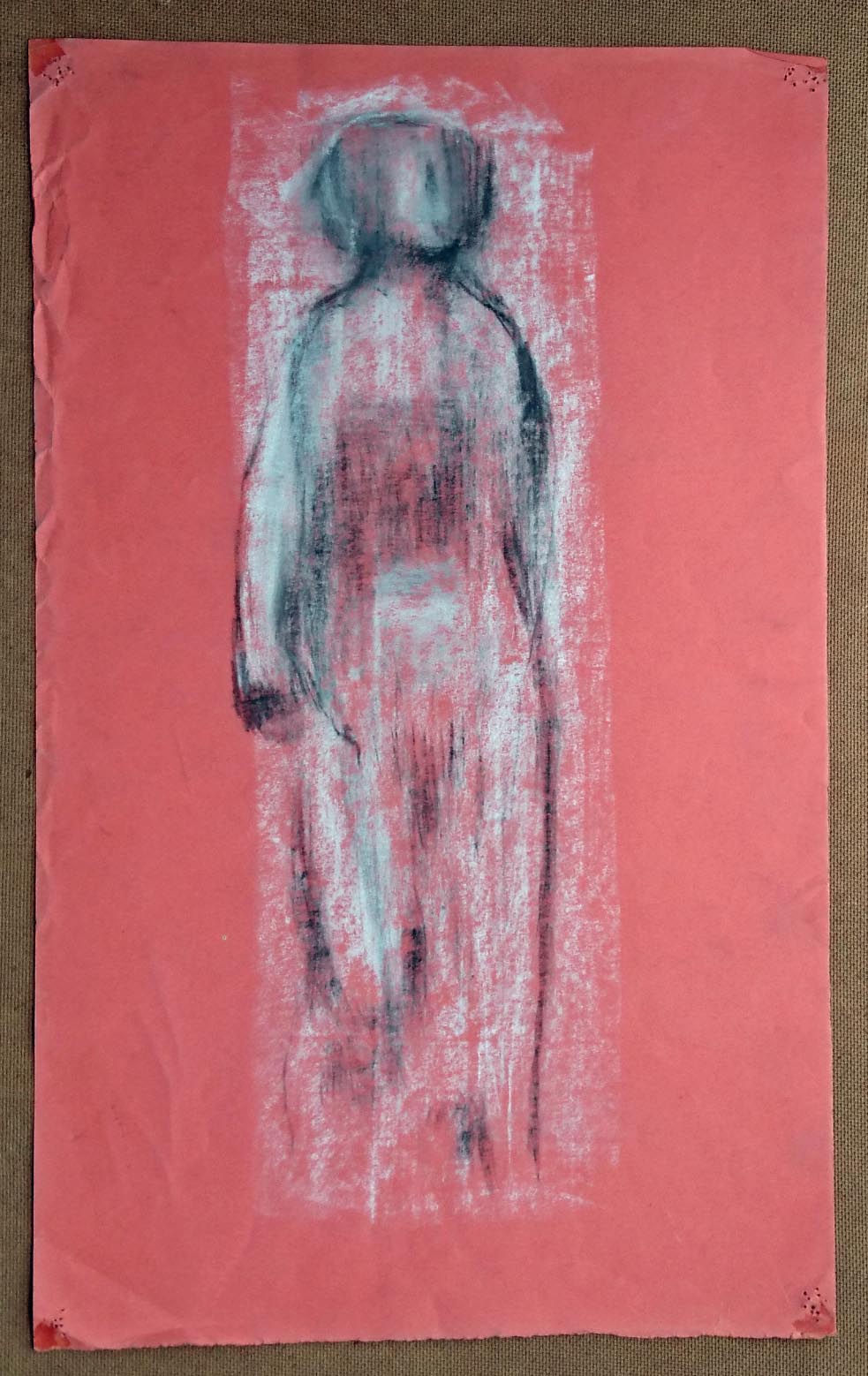
Our collection represents work from the whole of her life, from juvenilia to mature representations of gardens and garden flowers, to late works in chalks evoking a dreamy insubstantiality of myth and beauty.
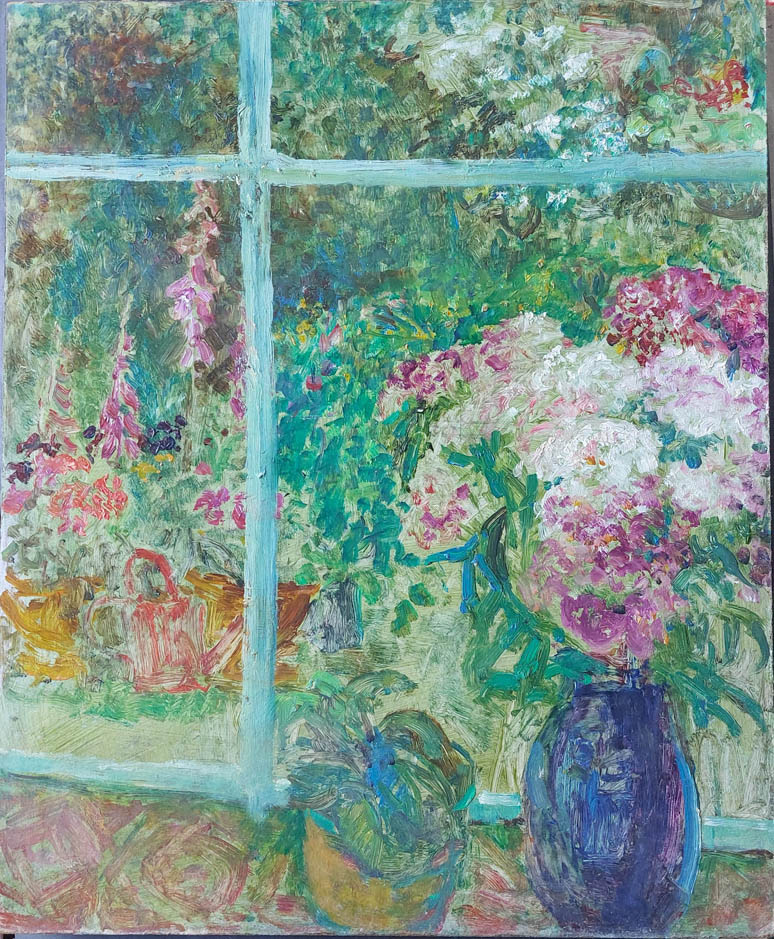
Her early experience as a mural artist and scene painter contribute to a powerful narrative and theatrical quality in her work. Certain themes in particular emerge as especially significant. Certain themes emerge as especially significant. The concept of resurrection is represented allegorically through the natural world, as buds emerge from old, dead stems. The celebration of nature as a God-given blessing is a leitmotif: the variety and beauty of flowers: in gardens, vases, jam jars, everywhere! She portrays great trees as semi-anthropomorphic protectors, offering shelter and refuge. Her world and art are suffused with meaning, visual richness and unbounded energy.
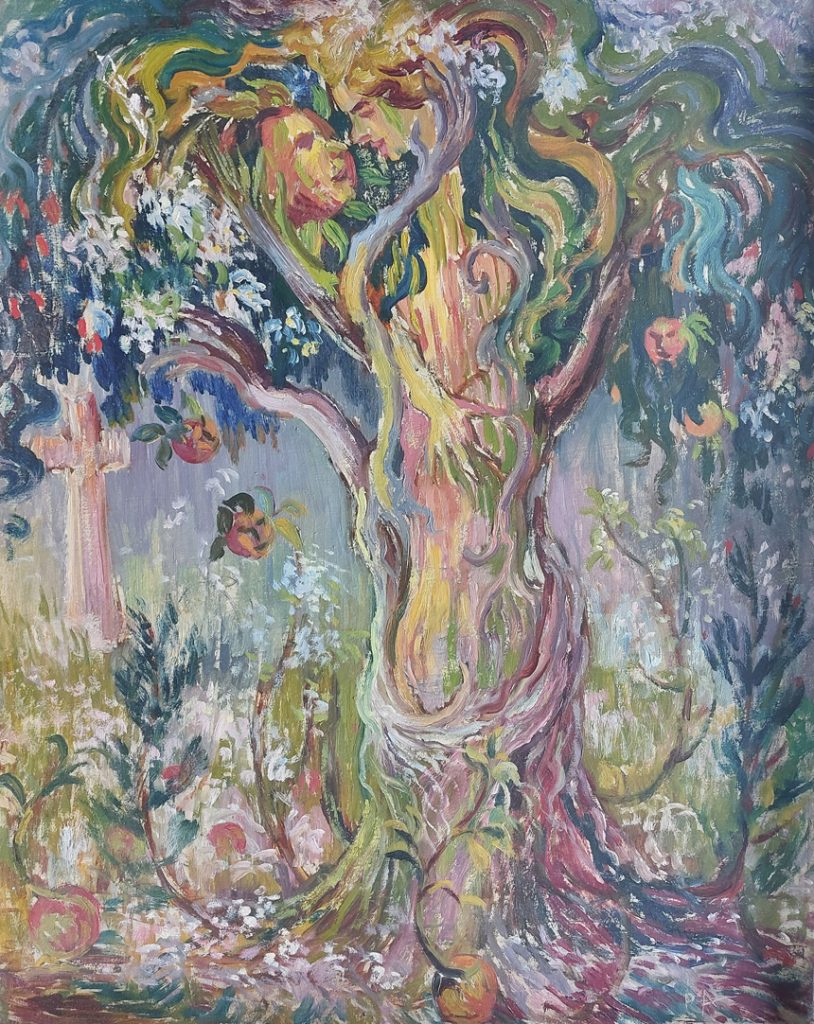
In addition to public commissions, she has work in public and private collections throughout the UK.
There is a very informative video about Patricia and Harold posted on YouTube by Life at the Masthead
© Lloyd Ellis 2025
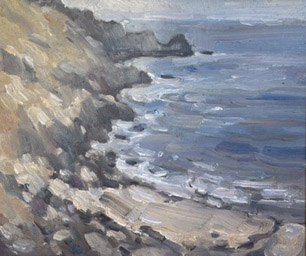
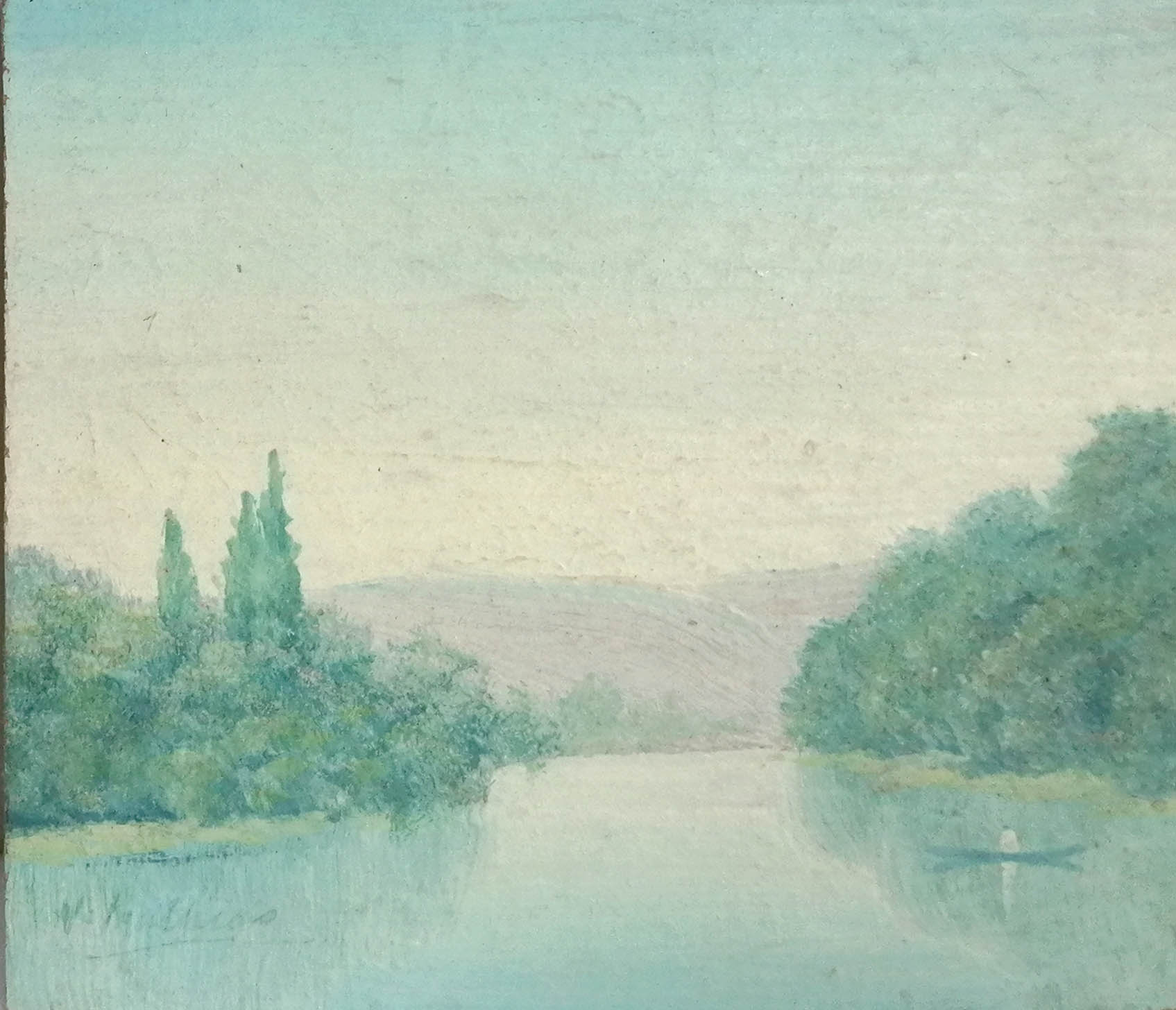
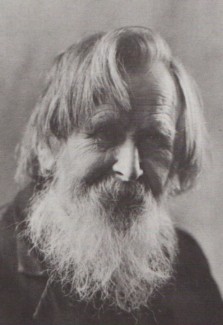 This idiosyncratic polymath offers one of the least acknowledged and most intriguing stories of English art in the first half of the twentieth century. Our collection largely dates from the 1930s, a period when his art reached a new sophistication and maturity. His use of soft, rich colour and a misty, atmospheric evocation of coastal landscapes around his home in southern Guernsey, together with brilliant portraits of the flora to which he devoted so much of his life are deeply influenced by French Impressionism and the later works of J M W Turner.
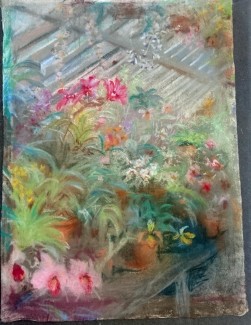 In 1895, following the death of his wife, and his departure from Oundle, Caparne left the East Midlands, initially for Devon, (changing his name from Caparn to Caparne) and then to the Channel Islands, and Guernsey, where he eventually settled at Bon Port near St Martin in 1920. He continued to develop his work as an iris and bulb specialist, creating the completely new variety of intermediate bearded iris in the 1890s. Working from his self-built bungalow and a studio and greenhouse made from an old tram carriage, he gradually transformed his immediate surroundings into one of the most beautiful gardens on the island, and himself into an accomplished landscape and botanical artist.